What is experiential learning?
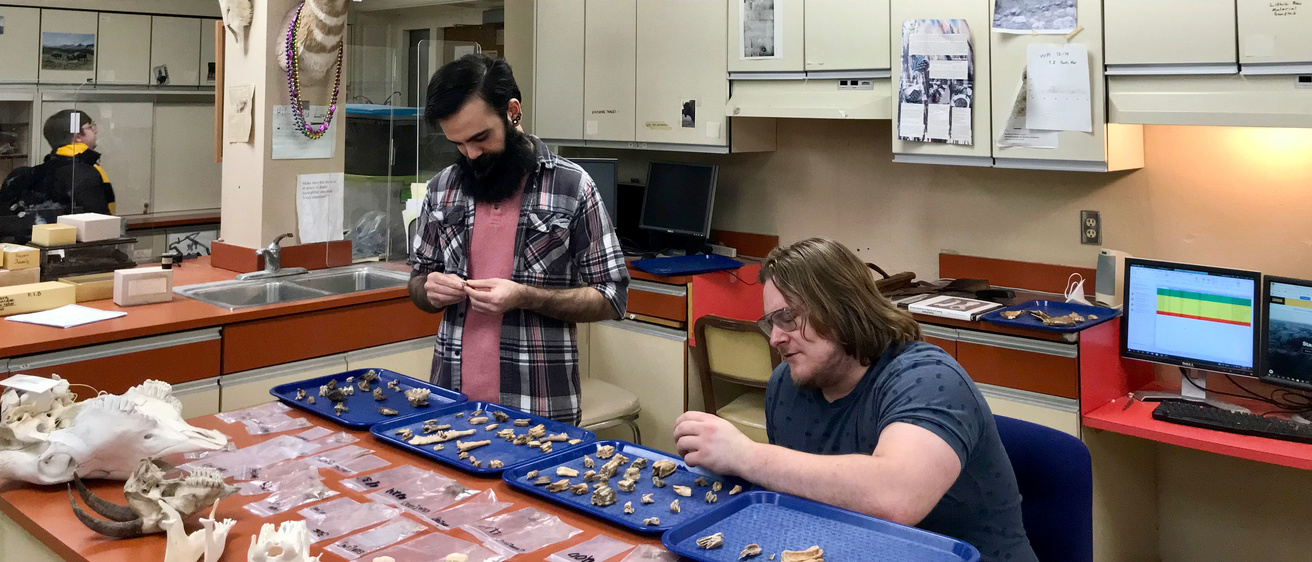
Experiential learning is an engaged learning process whereby students "learn by doing" and by reflecting on the experience. Experiential learning activities can include, but are not limited to, hands-on laboratory experiments, internships, practicums, field exercises, study abroad, undergraduate research and studio performances.
Scholarship for experiential learning
A new scholarship is now available to assist undergraduate students in defraying costs associated with internships, field schools, and study abroad opportunities.
Experiential learning for Anthropology majors
The Department of Anthropology recognizes the importance of experiential learning for students as they define their interests and work toward post-graduation goals. Anthropology faculty and staff help connect students to local, regional, and international academic and co-curricular opportunities.
Importantly, anthropology students are encouraged to participate in experiential learning only if it is conducted through reputable organizations that uphold ethical and health standards for both students and local populations worldwide. The following are additional resources to help students navigate their interactions outside of the classroom:
Experiential learning for Anthropology majors
Courses with experiential component
For a full list of CLAS policies on independent study, visit the college's Undergraduate Independent Study Policies page.
For B.A. Complete one (3 S.H.) of the following. For B.S. complete two (6 S.H.) of the following:
ANTH:2009 Individual Study (arr)
ANTH:2199 Practicum in Sociocultural Anthropology (arr)
ANTH:2208 Archaeological Methods (3)
ANTH:2290 Practicum in Archaeology (3)
ANTH:2390 Laboratory Methods in Biological Anthropology (3)
ANTH:3015 Independent Study (arr)
ANTH:3207 Animal Bones (3)
ANTH:3240 Cultural Resource Management (3)
ANTH:3255 Archaeological Ceramics (3)
ANTH:3295 Field Research in Archaeology (arr)
ANTH:3117 Using Ethnographic Methods (3)
ANTH:3305 Human Osteology (3)
ANTH:4080 Anthropology Internship (arr)
ANTH:4315 Human Evolutionary Anatomy (3)
Summer Archaeological Field School
Check back soon for more information on the Summer 2027 Archaeological Field School!
Internships and volunteer opportunities
Organizations in Iowa
- CARTHA (Iowa City)
- CARTHA (doer in Sanskrit) cultivates Collaborative Doers for Humanity ("Carthans") who bridge technological and social innovations to advance glocal good.
- Center for Worker Justice (CWJ) (Iowa City)
- CWJ works for social and economic justice through education, leadership development, and issue-based organizing.
- Community Health Free Clinic (Cedar Rapids)
- This clinic serves the uninsured and medically underserved, providing primary care, dental, and vision care.
- Coralville Community Food Pantry (Coralville)
- Coralville Community Food Pantry distributes nutritious groceries, offers food to families with children, shares free community meals, equips our neighbors with tools to grow their own food, and connects people facing diet-related health conditions to fresh produce grown at local farms.
- Ethnic Minorities of Burma Advocacy and Resource Center (EMBARC) (Des Moines, Waterloo)
- EMBARC is a grassroots coalition organization by and for refugees from Burma that works towards common goals to uplift all communities through advocacy, education, and community development.
- Field to Family (Iowa City)
- Field to Family works to create a region where people eat with the seasons, where farmers make a living, and our ecosystem is diverse, abundant, and healthy.
- Free Medical Clinic (FMC) (Iowa City)
- The FMC provides support and health care for those who are unable to receive care due to limiting factors such as scheduling and expenses.
- Grinnell Farm to Table (Grinnell)
- LFC partners with local farmers to provide fresh food and nutrition education to Grinnell residents in need.
- Grow: Johnson County (Iowa City)
- Grow: Johnson County's mission is to improve healthy food access through charitable food production and hands-on education.
- IC Compassion (Iowa City)
- IC Compassion is a nonprofit organization that offers many services, including immigration assistance and citizenship classes, ESL/computer tutoring, transportation and food assistance, and a free legal clinic.
- Immigrant Welcome Network of Johnson County (Iowa City)
- This new organization started in 2023--its mission is to empower and support new immigrant and refugee families in Johnson County, Iowa by providing temporary housing and comprehensive assistance in navigating the complexities of resettlement. We aim to promote self-sufficiency and integration through connecting families with resources such as job opportunities, education, healthcare, and permanent housing.
- InsideOut Reentry (Iowa City)
- Returning to and becoming an active member of society after being in prison is tough, and InsideOut Reentry strives to give these individuals every possible chance to build productive lives.
- International Rescue Committee (IRC) (Iowa City and Des Moines)
- IRC’s staff, volunteers and community partners work together to empower refugees to restore their dignity and self-reliance and participate in their new communities. Their programs are designed to ensure refugees thrive in communities across Iowa—whether ensuring children are enrolled in school, adults become self-reliant through employment or starting businesses, or families receive acute medical care they need to recover from trauma or illness. They also offer immigration, youth, and English language programs to members of the community.
- Iowa Harm Reduction Coalition (IHRC) (Iowa City, Cedar Rapids, Eastern Iowa)
- IHRC works to improve health equity in Iowa communities through mobile outreach, education, and advocacy.
- Iowa United Nations Association (Iowa UNA) (Iowa City)
- Campaigns include clean water, anti-malaria nets, and immunization.
- Mid-Iowa Community Action (MICA)
- MICA serves children and families in central Iowa, offering programs that mitigate the effects of poverty.
- Monsoon Asians & Pacific Islanders in Solidarity (Iowa City and Des Moines)
- Monsoon serves victims/survivors of domestic violence, sexual assault and human trafficking in Asian and Pacific Islander (API) communities in Iowa. Monsoon’s mission is to end all forms of gender-based violence and build healthy communities through transformative justice and social change.
- Nisaa African Family Services (Des Moines and Iowa City)
- Nisaa is a non-profit that aims to end domestic violence and sexual assault in African immigrant and refugee communities by promoting social, economic, and political self-determination of all women.
- Open Heartland (Iowa City)
- Open Heartland provide clients access to advocacy, legal and housing assistance, education, basic necessities (food and hygiene), youth enrichment programs, and most importantly, a community that provides friendship and support as they navigate their new lives in Iowa. Open Heartland serves approximately 400+ Latinx families living in our community’s most vulnerable apartment complexes and mobile home communities.
- PHC Healthcare (Des Moines)
- PHC provides a spectrum of medical and dental services to underserved individuals and families, including help with entitlements, case management, transportation, translation and patient education.
- Practical Farmers of Iowa (PFI) (Ames)
- PFI's mission is equipping farmers to build resilient farms and communities.
- Proteus (Des Moines, Fort Dodge, Iowa City)
- Proteus, Inc. provides farmworkers, immigrants, and others with a variety of services that improve their health, education, and economic opportunities.
- Refugee and Immigrant Association (RIA) (serving Johnson and Linn counties)
- RIA provides various kinds of support to help immigrants become integrated into our local communities.
- The U.S. Committee for Refugees and Immigrants (USCRI) (Des Moines)
- USCRI Des Moines helps refugees successfully adapt to life in the United States by defending human rights, promoting self-sufficiency, and forging community partnerships.
University of Iowa opportunities
- University of Iowa Center for Advancement (fundraising and development internships)
- Cmiel Funded Human Rights Internship Program
- Office of Sustainability and the Environment volunteer opportunities
- Hawkeye Service Breaks
- Bridge
- Iowa N.E.W. Leadership Institute
- Mobile Clinic Volunteering
National and global opportunities
Study abroad
University of Iowa International Programs provides a guide for Anthropology students to explore Anthropology-related study abroad programs. If you're volunteering abroad, consider reading Volunteering Abroad? Read This Before You Post That Selfie to learn more about problematic photos taken by Western volunteers.
Experiential learning for Global Health Studies majors
The Department of Anthropology recognizes the importance of experiential learning for students as they define their interests and work toward post-graduation goals. Global health studies faculty and staff help connect students to local, regional, and international academic and co-curricular opportunities.
Importantly, global health studies students are encouraged to participate in experiential learning only if it is conducted through reputable organizations that uphold ethical and health standards for both students and local populations worldwide. Students can take the course GHS:3034 Doing Harm by Doing Good to explore the complex ethical issues involved in engaging in experiential learning in global communities. The following are additional resources to help students navigate their interactions outside of the classroom:
Courses with experiential component
GHS:3011 Global Research: Strategies and Skills
GHS:3012 Community-Based Global Health Research
GHS:3092 Spanish in the Community
GHS:4150 Health and Environment: GIS Applications
GHS:4990 Independent Project in Global Health
GHS:4991 Honors Thesis in Global Health Studies
Independent project in global health studies
Global health studies students have the opportunity to earn credit for independent work with a University of Iowa faculty member. Independent projects must be approved by the Global Health Studies Program prior to student registration.
For a full list of CLAS policies on independent study, visit the college's Undergraduate Independent Study Policies page.
Enrollment criteria and instructions
- Students find a faculty mentor for their GHS:4990 Independent Project in Global Health. Contact the Global Health Studies Director at globalhealthstudies@uiowa.edu if you need help finding a faculty mentor.
- Students follow the instructions below to create a project proposal.
- Students complete an online Registration Preapproval form to request approval for their GHS:4990 Independent Project in Global Health. They must upload their project proposal to the online form.
- Students will receive an email with permission to enroll in GHS:4990 Independent Project in Global Health within 5 days of the final approval of the online form. The deadline to add a course without a Dean's signature is day 10 of the fall and spring semesters. Contact globalhealthstudies@uiowa.edu with questions.
- Students must be in academic good standing to register for GHS:4990 Independent Project in Global Health.
- If students want GHS:4990 Independent Project in Global Health to satisfy any part of their Global Health studies minor or major requirements, prior approval must be granted by the Global Health Studies Program (contact globalhealthstudies@uiowa.edu).
- A maximum of 3 semester hours of GHS:4990 credit may be used in the Global Health Studies minor.
- A maximum of 6 semester hours of GHS:4990 credit may be used in the Global Health Studies BA or BS.
Note
Any research which involves "human subjects" must be reviewed by the University of Iowa Institutional Review Board (IRB) prior to the initiation of the project. Proof of the determination/review process must also be submitted to the Global Health Studies Program before the project proposal can be approved. Read a summary of the IRB process on the International Programs website. For all questions contact the IRB at (319) 335-6465; or complete the IRB Determination Form to find out if your research meets the definition of human subjects research.
Research
- Ferentz Undergraduate Research Fund
- Iowa Policy and Opinion Lab (IPOL)
- Center for Social Science Innovation
- Latham Science Engagement Fellowship Program
- Stanley Award for Undergraduate Research
- (The Dewey) Stuit Fund for Undergraduate Research
- Sustainability Professional Growth and Mentorship Program (Under development--check here for related updates and information)
Internships and volunteer opportunities
Organizations in Iowa
- CARTHA (Iowa City)
- CARTHA (doer in Sanskrit) cultivates Collaborative Doers for Humanity ("Carthans") who bridge technological and social innovations to advance glocal good.
- Center for Worker Justice (CWJ) (Iowa City)
- CWJ works for social and economic justice through education, leadership development, and issue-based organizing.
- Community Health Free Clinic (Cedar Rapids)
- This clinic serves the uninsured and medically underserved, providing primary care, dental, and vision care.
- Coralville Community Food Pantry (Coralville)
- Coralville Community Food Pantry distributes nutritious groceries, offers food to families with children, shares free community meals, equips our neighbors with tools to grow their own food, and connects people facing diet-related health conditions to fresh produce grown at local farms.
- Ethnic Minorities of Burma Advocacy and Resource Center (EMBARC) (Des Moines, Waterloo)
- EMBARC is a grassroots coalition organization by and for refugees from Burma that works towards common goals to uplift all communities through advocacy, education, and community development.
- Field to Family (Iowa City)
- Field to Family works to create a region where people eat with the seasons, where farmers make a living, and our ecosystem is diverse, abundant, and healthy.
- Free Medical Clinic (FMC) (Iowa City)
- The FMC provides support and health care for those who are unable to receive care due to limiting factors such as scheduling and expenses.
- Grinnell Farm to Table (Grinnell)
- LFC partners with local farmers to provide fresh food and nutrition education to Grinnell residents in need.
- Grow: Johnson County (Iowa City)
- Grow: Johnson County's mission is to improve healthy food access through charitable food production and hands-on education.
- IC Compassion (Iowa City)
- IC Compassion is a nonprofit organization that offers many services, including immigration assistance and citizenship classes, ESL/computer tutoring, transportation and food assistance, and a free legal clinic.
- Immigrant Welcome Network of Johnson County (Iowa City)
- This new organization started in 2023--its mission is to empower and support new immigrant and refugee families in Johnson County, Iowa by providing temporary housing and comprehensive assistance in navigating the complexities of resettlement. We aim to promote self-sufficiency and integration through connecting families with resources such as job opportunities, education, healthcare, and permanent housing.
- InsideOut Reentry (Iowa City)
- Returning to and becoming an active member of society after being in prison is tough, and InsideOut Reentry strives to give these individuals every possible chance to build productive lives.
- International Rescue Committee (IRC) (Iowa City and Des Moines)
- IRC’s staff, volunteers and community partners work together to empower refugees to restore their dignity and self-reliance and participate in their new communities. Their programs are designed to ensure refugees thrive in communities across Iowa—whether ensuring children are enrolled in school, adults become self-reliant through employment or starting businesses, or families receive acute medical care they need to recover from trauma or illness. They also offer immigration, youth, and English language programs to members of the community.
- Iowa Harm Reduction Coalition (IHRC) (Iowa City, Cedar Rapids, Eastern Iowa)
- IHRC works to improve health equity in Iowa communities through mobile outreach, education, and advocacy.
- Iowa United Nations Association (Iowa UNA) (Iowa City)
- Campaigns include clean water, anti-malaria nets, and immunization.
- Mid-Iowa Community Action (MICA)
- MICA serves children and families in central Iowa, offering programs that mitigate the effects of poverty.
- Monsoon Asians & Pacific Islanders in Solidarity (Iowa City and Des Moines)
- Monsoon serves victims/survivors of domestic violence, sexual assault and human trafficking in Asian and Pacific Islander (API) communities in Iowa. Monsoon’s mission is to end all forms of gender-based violence and build healthy communities through transformative justice and social change.
- Nisaa African Family Services (Des Moines and Iowa City)
- Nisaa is a non-profit that aims to end domestic violence and sexual assault in African immigrant and refugee communities by promoting social, economic, and political self-determination of all women.
- Open Heartland (Iowa City)
- Open Heartland provide clients access to advocacy, legal and housing assistance, education, basic necessities (food and hygiene), youth enrichment programs, and most importantly, a community that provides friendship and support as they navigate their new lives in Iowa. Open Heartland serves approximately 400+ Latinx families living in our community’s most vulnerable apartment complexes and mobile home communities.
- PHC Healthcare (Des Moines)
- PHC provides a spectrum of medical and dental services to underserved individuals and families, including help with entitlements, case management, transportation, translation and patient education.
- Practical Farmers of Iowa (PFI) (Ames)
- PFI's mission is equipping farmers to build resilient farms and communities.
- Proteus (Des Moines, Fort Dodge, Iowa City)
- Proteus, Inc. provides farmworkers, immigrants, and others with a variety of services that improve their health, education, and economic opportunities.
- Refugee and Immigrant Association (RIA) (serving Johnson and Linn counties)
- RIA provides various kinds of support to help immigrants become integrated into our local communities.
- The U.S. Committee for Refugees and Immigrants (USCRI) (Des Moines)
- USCRI Des Moines helps refugees successfully adapt to life in the United States by defending human rights, promoting self-sufficiency, and forging community partnerships.
University of Iowa opportunities
- University of Iowa Center for Advancement (fundraising and development internships)
- Cmiel Funded Human Rights Internship Program
- Office of Sustainability and the Environment volunteer opportunities
- Hawkeye Service Breaks
- Bridge
- Iowa N.E.W. Leadership Institute
- Mobile Clinic Volunteering
National and global opportunities
Study abroad
University of Iowa International Programs provides a guide for Global Health Studies (GHS) students to explore GHS-related study abroad programs. If you're volunteering abroad, consider reading Volunteering Abroad? Read This Before You Post That Selfie to learn more about problematic photos taken by Western volunteers.
University resources
Undergraduate research
Gain hands-on experience by participating in the research and creative discovery of faculty and staff.
Internships
Build on-the-job experience while connecting and networking with professionals in your field.
Study abroad
Enhance your degree, stand out to employers, shape your own perspective, and transform into a global citizen.
Community-engaged courses
Apply your academic skills and knowledge to help community partners solve real-world problems.